Navigation perception
This work supports autonomous rover navigation through computer-vision pipelines for fiducial tag detection, QR-code recognition, localization, and position estimation. These perception components help the rover identify key markers in its environment and use them during navigation and testing scenarios.
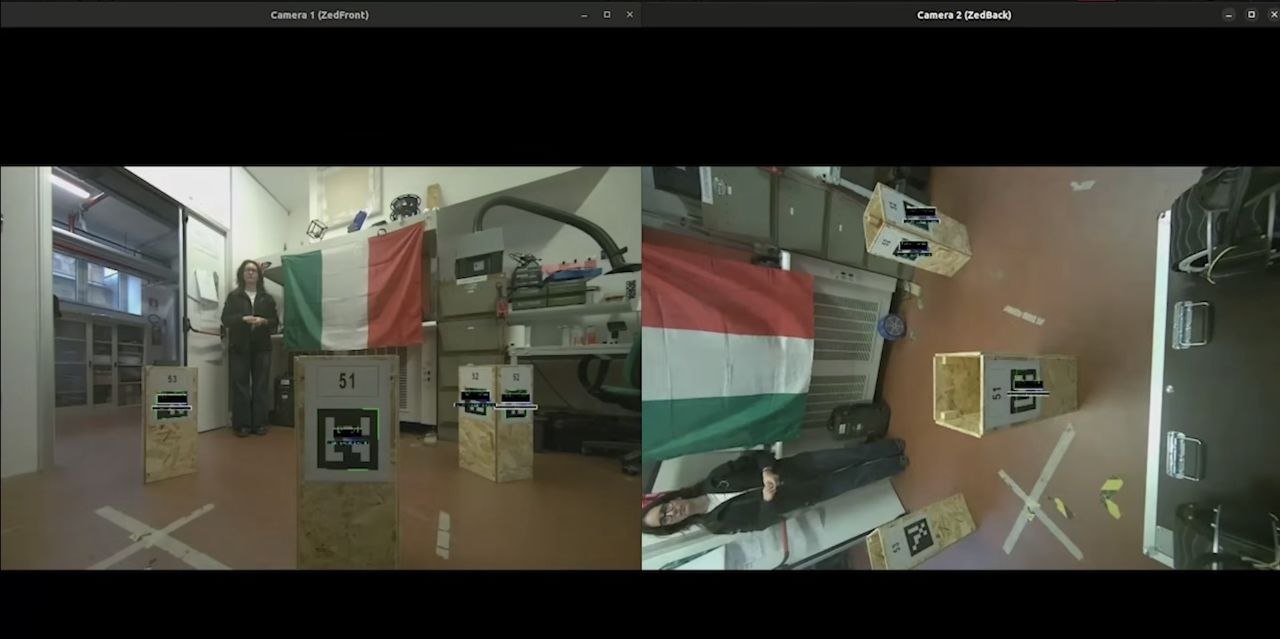
Testing in simulation
I worked with OpenCV, C++, Python, and ROS 2 to test detection behavior in both real camera views and simulated environments. The simulation views made it possible to test controlled scenarios before relying on physical rover tests.
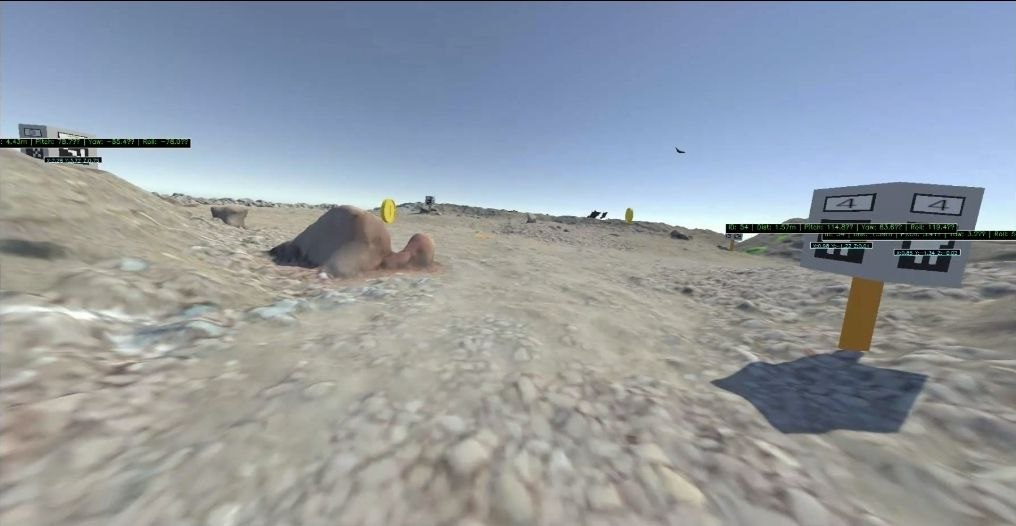
Pipeline validation
The detection pipeline was validated alongside terminal and simulation feedback, helping connect what the rover sees with what the autonomy software receives. This made it easier to debug perception behavior and confirm that simulated tests were producing useful outputs.
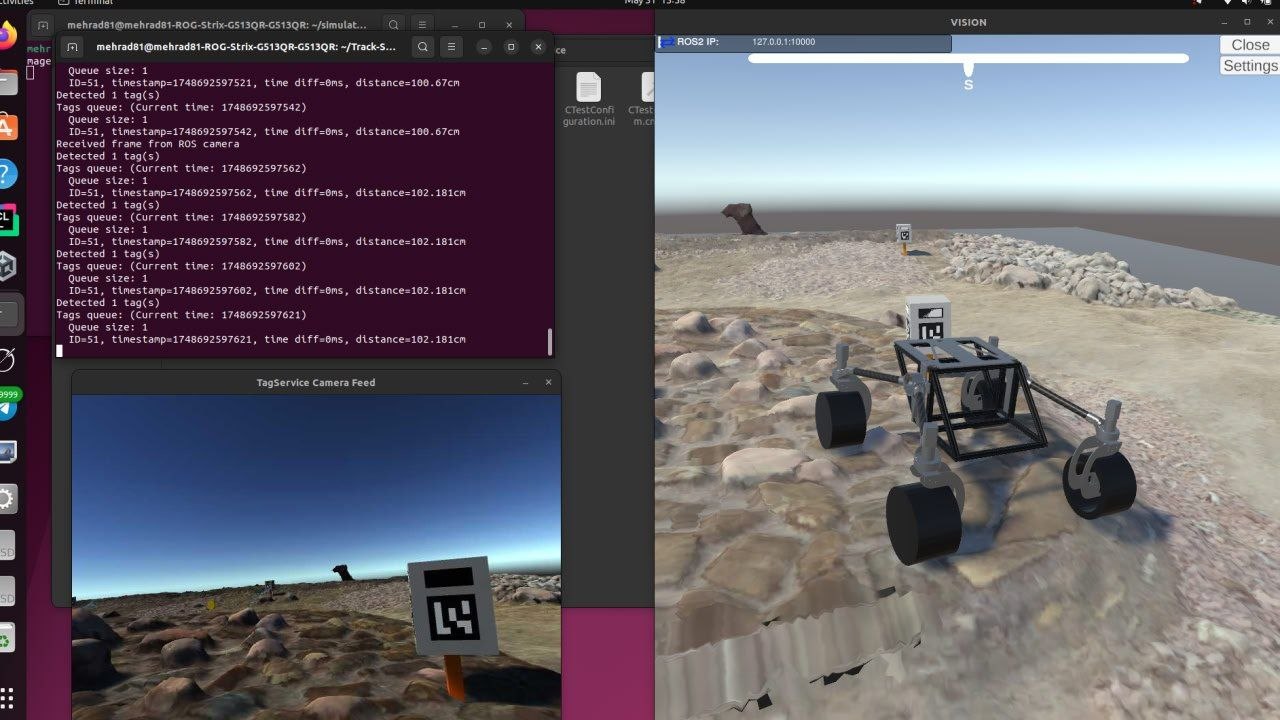
Dataset preparation
The project also involved preparing and annotating datasets for object-detection workflows using tools such as Roboflow. This helped connect perception research with rover-specific testing needs and provided a stronger base for future object-recognition work.
Key contributions
- Developed and tested tag and QR-code detection pipelines for autonomous navigation tasks.
- Connected perception outputs with rover localization and position-estimation workflows.
- Prepared annotated datasets and detection experiments for rover-relevant object recognition.
- Validated perception behavior in both real-world camera views and simulation scenes.